


Batched Cocktails for Beginners

Batching cocktails is the cheat code that enables the best bars in the world to serve incredibly complex drinks faster than ever before, and it’s equally relevant and useful to high-volume, less cocktail-focused venues like pubs and restaurants.
The principle behind batching is simple: you do the legwork of creating cocktails behind the scenes, so service becomes a one-or two-step process. The result?
More Consistency and faster Service.
Today, we’re going to take you through some key principles behind a successful batching program.
- Never batch perishable ingredients
- Precision and hygiene
- Proper labelling
- Don’t batch every serve
- Know when to add dilution
Never batch perishable ingredients
As a rule of thumb, you should never batch perishable ingredients that will oxidise or go off, as this will spoil the batch. Common examples of this would be citrus in a Margarita, or the Espresso in an EspressoMartini. Adding lime juice or Espresso to either of these cocktails would reduce the shelf life to 1 or 2 days.
Classic Margarita Batch (10 serves)
450 ml Casamigos Blanco Tequila
150 ml Triple Sec
50 ml Sugar Syrup
Total Batch
Approx: 18 Std Drinks
650 ml
To Serve
65 ml Margarita Batch
20 ml Lime Juice
Shake and strain into a chilled coup.
Garnish: Half Salt Rim
Approx 1.8 Std Drinks
Espresso Martini Batch (10 Serves)
400 ml Smirnoff Vodka
200 ml Mr Black
100 ml Sugar Syrup
Total Batch
Approx 15.6 STD Drinks
700ml
To Serve
70 ml Espresso Martini Batch
30 ml Fresh Espresso
Shake and strain into a chilled coup
Garnish: 3 coffee beans
Approx 1.6 Std Drinks
The exception to this would be a special event when you know you will need X cocktails. Eg, a special event requests 55Espresso Martini’s to be prepared on arrival. In that example, you would batch the entire recipe, which can then be added directly to the shaker for service.
Precision and Hygiene
These two points are incredibly important when it comes to batching. If you make a mistake when making a single cocktail, you can throw it away and start again with a minimal cost to the business, but if you mismeasure a batch, you risk ruining a hundred dollars' worth of stock. Similarly, improper hygiene practices can lead to bacterial growth, which can pose a WHS risk for your guests.
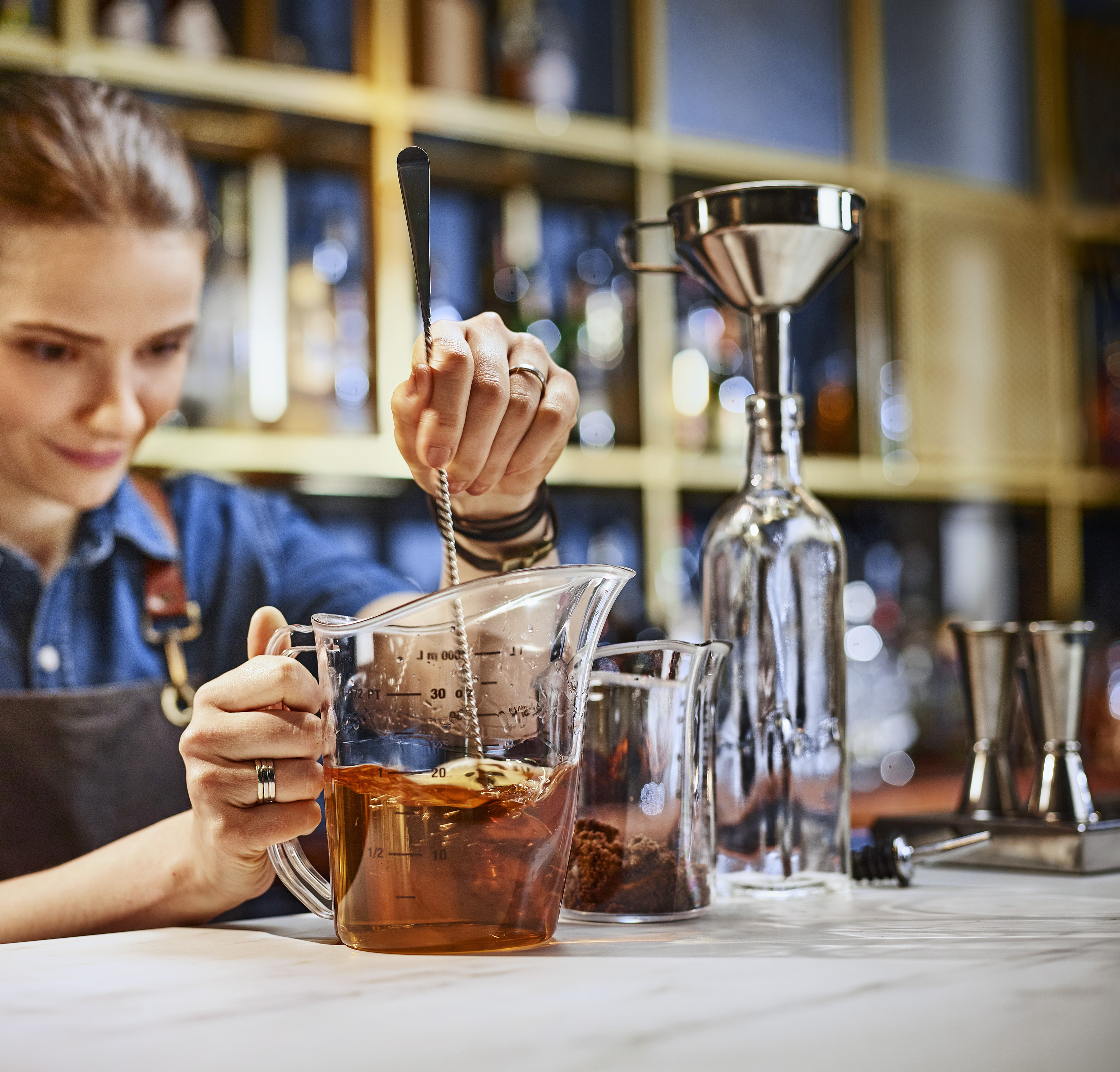
When it comes to precision, this comes down to proper training and setup. Training your team to measure batches from the cheapest to most expensive ingredient can be helpful, but given that batches are mostly made up of the alcoholic ingredients, that doesn’t help much.
The old woodworking adage of “Measure twice, cut (or pour) once” is more relevant. You want to avoid making mistakes altogether.
- Ensure that you have a clear recipe for the volume you require. Is your batch for 700ml bottles, or 10-litre Cambro containers?
- Batch one drink at a time; this avoids confusion by keeping only the ingredients you need to hand.
- Gather all the ingredients and double-check the bottles against the recipe. (Many liqueur shave similar labels. You don’t want to mistake Triple Sec for White Cacao in your Margarita batch!)
- Measure in appropriately sized jugs to improve accuracy. E.g., a 250 ml Jug is a more accurate way to measure 100 ml than a 5000 ml jug. The top bars in the world translate all their recipes into grams and measure using a precision electronic scale. That’s not always necessary, but it is a good example of precision in action.
When it comes to hygiene and equipment, your chefs will probably be the best resource, as they’ll be well-versed in food hygiene practices. When it comes to your measuring equipment, talk to them about what you’re doing and ask them for help.
Proper hygiene surrounding batching bottles is another key area that needs to be considered. You either need to use a no-rinse bottle sanitiser (available online or from your local brewing supply shop) or the sanitiser function on your glass washer/ dishwasher. Follow the manufacturer’s instructions here.
Proper Labelling
A standardised labelling system is key to batching. This can be as simple as masking tape and a Sharpie, or a labelling gun.
We recommend including:
Name of cocktail
Date of batch
Initials of the person who prepared the batch.
Don’t Batch Every Serve
Batched cocktails take up additional space, especially when stored in the fridge. This can lead to logistical problems. When you’re starting out your batching program, start by identifying your best-selling cocktails. These present the best return on investment. Start with these and then build from there.
To Dilute or not to dilute
If you’re batching a stirred cocktail, you might want to skip stirring altogether and batch a fridge/freezer-door cocktail instead. This simply means including filtered water in the batch in place of the dilution that would have come from stirring. We recommend starting with 20-25% of the cocktail's volume. The batchcan then be stored in the fridge or freezer and poured directly over ice, orinto a chilled coup to serve.
The temperature will determine the drink’s final enjoyment. A martini or other straight-up drinks require the freezer. A Negroni would work, served from the fridge if necessary, since it’s served on ice which will bring it down to temperature.
Batched Negroni (6 Serves)
180ml Tanqueray London Dry
180ml Italian Bitter Red Liqueur
180ml Sweet Vermouth
110ml Filtered Water
Total Batch
Approx 11.5 STD Drinks
648ml
To Serve
100ml Negroni Batch
Measure and pour over cubed ice (or a large block) in a rocks glass
Garnish with an Orange Zest or Slice
Approx 1.2 STD Drinks

FreezerDoor Martini (7 Serves)
420ml Tanqueray London Dry
140ml Dry Vermouth
110ml Filtered Water
TotalBatch
Approx 15.2 STD Drinks
672ml
To Serve
90ml Martini Batch
Measure and pour into a frozen coup
Garnish with Olives or a Lemon Zest
Approx 2.2 St Drinks

There you have it, that’s everything you need to get your batching program up and running. Remember that a batching program is an ongoing process that needs to be monitored and adapted. If your sales go up because your cocktails are coming out faster and to a higher standard, you’ll need to increase your par levels and batch more. Also, remember that these will need to be added to your stocktake process.
Key Takeaways
- Batching is relevant to all levels of bars and results in more consistent, higher-quality cocktails
- Measure twice, pour once. Accurate batching is vital!
- Think about what to batch, and what not to!
Instagram @diageobarac
Facebook: Diageo Bar Academy